Thermador steam oven not making steam
The oven heats but never produces steam, or the cycle stops early
Monday to Friday 8:00am – 6:00pm · Saturday 9:00am – 4:00pm
(904) 478-8963Corrects That a model name is enough to order a part, and that every repair either happens on the first visit or does not happen at all.
The serial decides
On a built-in, the build range identifies the part far more reliably than the model name.
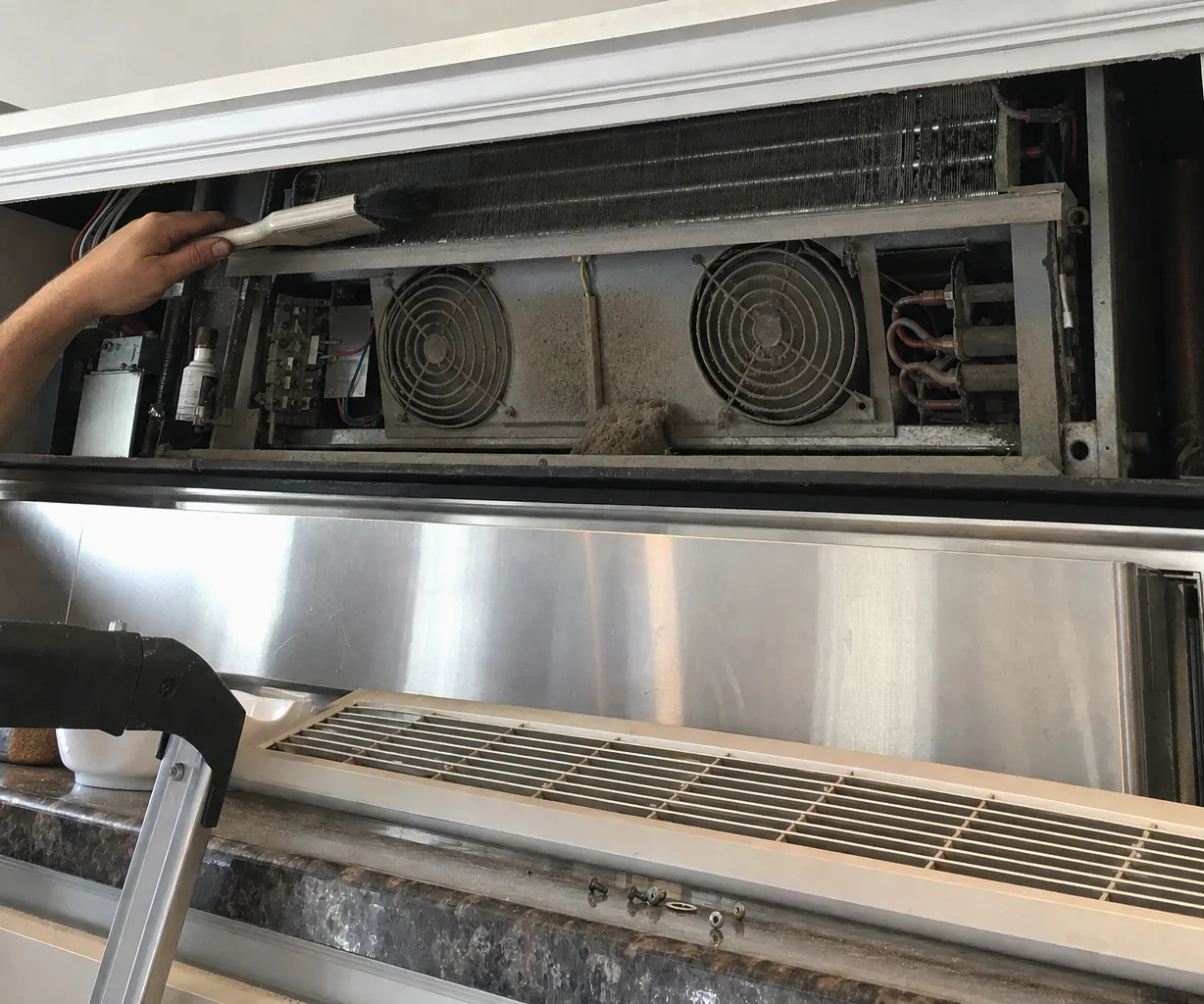
Two repairs with the same symptom can take one visit or three weeks, and the difference is almost never the technician. It is what the appliance is, when it was built, and whether the part that fits it is still in current supply. This is the part of the job customers see least and ask about most, so here it is in full.
Built-in appliances are produced in long runs and revised inside those runs. Boards, fans, hinges, valves and harnesses get superseded mid-production, and the replacement is often correct only for a range of build dates. Two appliances that look identical in a showroom photograph, bought two years apart, can take different components.
The serial number is what resolves it, because it identifies the build rather than the marketing name. Find it before you call. On built-in refrigeration it is usually on a plate inside the cabinet near the top or behind the toe grille; on a wall oven, inside the door frame or along the edge of the frame; on a dishwasher, on the tub edge behind the door; on a coffee system or warming drawer, on the side of the housing where the appliance slides out.
Photograph the plate rather than transcribing it. Digits get read wrong, and an ordered part that turns out to be for a different build range costs a week.
An OEM part is the manufacturer’s own component for that build. On simple mechanical items the difference from a generic equivalent can be small. On anything electronic, on anything that seals, and on anything that carries a safety function, it is not small at all: aftermarket control boards frequently carry different firmware behaviour, aftermarket gaskets rarely match the compression profile the door was designed around, and a part that almost fits a built-in ends up transferring its error into the cabinet geometry.
That is why the parts warranty on this site is worth something. A 365-day parts warranty on an unknown-origin component would be a promise about a supply chain nobody controls.
Three things, roughly in order.
The first is a confirmed diagnosis. A part ordered on a guess is a part ordered twice. The flat diagnostic exists so that what gets ordered is what the appliance actually needs.
The second is currency of supply. Components for appliances still in production, and for the generation immediately behind them, generally move quickly. Long-superseded parts, low-volume assemblies and anything specific to a short build range do not, and no amount of chasing changes that.
The third is whether the fault is a component or an assembly. A fan motor, a thermal fuse, a hinge set, a gasket, a valve — these are stocked broadly. A full control assembly, a door in a custom finish, or a sealed-system component is a different order of lead time.
A repair on a built-in should be quoted with the part named, the labour stated, and the expected wait written down before anything is ordered. If a part is on extended lead time, that belongs in the estimate on day one, not in a phone call a fortnight later. If the appliance is safe to use in the meantime, the estimate should say so; if it is not, it should say that instead.
Nothing on this site charges for parts that were not agreed in advance. The diagnostic is flat, credited toward the repair, and the estimate comes before any work begins.
Some faults are not worth a part at all. An appliance whose replacement component has been superseded out of supply, a sealed-system failure on a column that is already at the end of its service life, or a fault created by the cabinetry rather than the machine — in each case ordering something is the wrong move.
The last of those is the one owners find hardest to hear, because there is nothing to buy. A door held out of square by an opening a few millimetres too narrow will not seal whatever hinge or gasket goes into it. The repair is joinery, and saying so is more useful than fitting a part that will fail the same way.
The serial number photograph, the appliance type, what the machine does rather than what you think has broken, and whether anything was installed, renovated or storm-affected shortly before the fault appeared. Those four facts decide whether the right part is on the van, on order, or unnecessary.
$80 covers the diagnosis, and it is taken off the total if you decide to go ahead. Past that the figure is set by which component has actually failed, and the rows below are where the work this page describes has been settling. Nobody here quotes one number before the panel is off.
| What has failed | Parts and labor |
|---|---|
| Diagnostic visit | $80 flat |
| Igniter, spark module or surface element | $210–$490 |
| Oven thermostat or temperature sensor | $180–$560 |
| Bake or broil element | $210–$580 |
| Convection fan or motor | $260–$670 |
| Control board or touch panel | $440–$1,010 |
| Door hinge, glass or seal | $180–$680 |
| Refrigeration column sealed system | $920–$2,400 |
A comparable Thermador wall oven, rangetop or column, appliance only — before delivery, installation or cabinetry. National appliance pricing, not Florida labour.
| New appliance | Appliance only |
|---|---|
| Wall oven, the usual repair-or-replace comparison | $4,200–$9,500 |
| Professional rangetop or range | $5,500–$14,500 |
Ranges, not quotes. The width of a band is mostly access: a component reached from the front is one job, and the same component behind an appliance that has to come out of its opening is quite another. How a job is priced.
The oven heats but never produces steam, or the cycle stops early
The oven is not heating up: it preheats slowly, runs cool, or never reaches the set temperature
The column runs but is not cooling: the cabinet drifts warm, or one section cools while the other does not
The dishwasher is not draining: water is standing in the bottom of the tub at the end of the cycle
The machine reports no water, or grinds and heats but never brews
The blower runs at full speed but smoke and steam still spill into the room
That a repair is priced by the size or the age of the appliance, rather than by which single component inside it has actually failed.
That calling an independent technician or fitting a non-Thermador part cancels the warranty, when Thermador's own range statement says neither one voids it.
That a gas burner which glows or clicks without lighting always needs a new igniter, when a damp tip, a crooked cap or a tripped breaker gives the same symptom.
A diagnostic beats a guess. Scheduled appointments across Clay County.
Call (904) 478-8963